Skywarn Chats: Weather Alert Relay from IEMBot
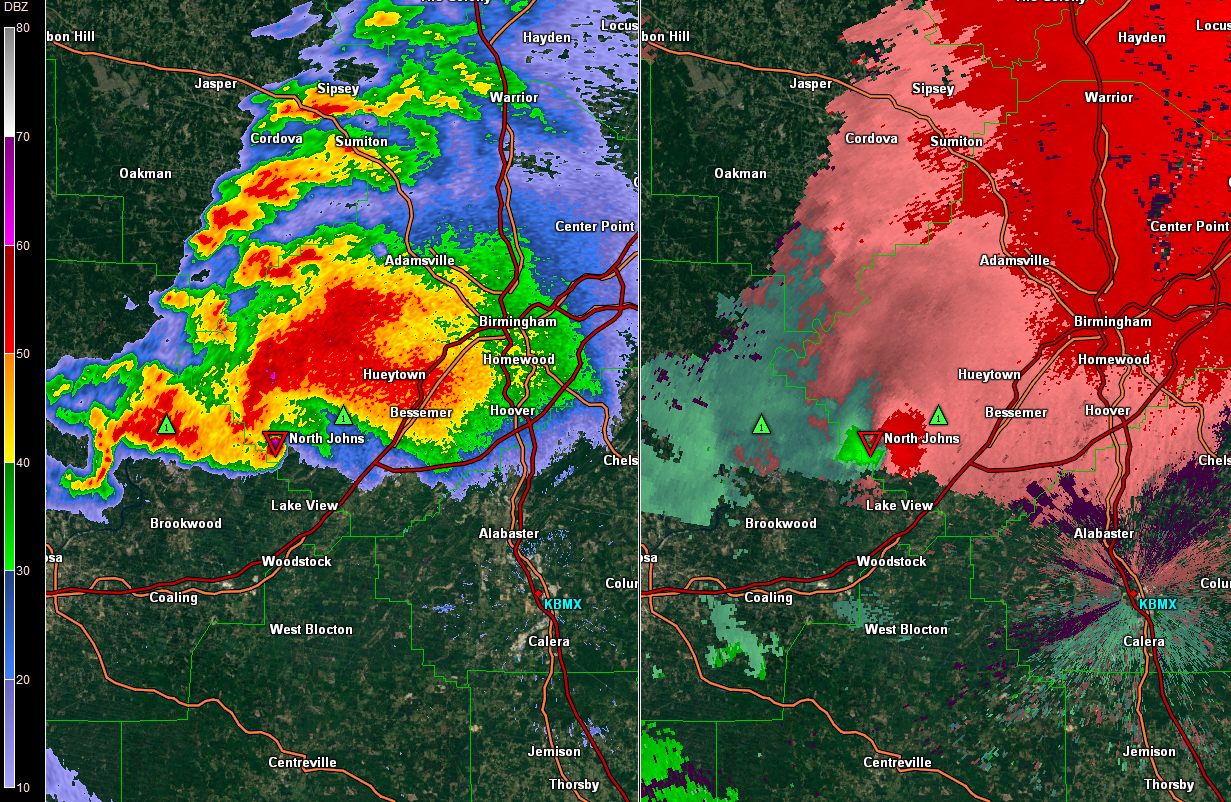
Problem Statement:
Weather chats do not have built-in real-time severe weather alerts, for Skywarn storm spotter coordination chats/groups.
Solution: Matterbridge Chat Relay
I (Casey Benefield, NZ2O) have a low-cost turn-key solution to providing this capability, for now. Here's a Github repository with the instruction/configuration process.
 nz2o
nz2o
Data Flow:
- National Weather Service issues a VTEC (valid time-extent) product.
- IEMbot consumes that data, and relays it to one of the many IEMbot chats, using XMPP. (https://weather.im/iembot/)
- Matterbridge (42wim/Matterbridge) runs on Linux, and connects to IEMbot, to consume the messages immediately as they are posted.
Matterbridge also connects to Slack (or other chat solution) via webhooks or bot account, and relays the message to the chat/channel.
Known issues:
- Authentication isn't forever. Sometimes you have to go into the Linux box to log it in again, but it stays logged in for months.
- IEMbot is a middle-man failure point. A better solution would be to consume the OASIS/CAP protocol messages. Maybe for a future project.
- The Github Readme.MD doesn't consider how you might configure this in a docker container - which is becoming far more common. However, there is a guide for that as well!
https://github.com/42wim/matterbridge/wiki/Deploy:-Docker
History of Skywarn Storm Spotter Comms
In the beginning...
In the late 1950s, amateur radio was used to report severe weather. In 1965, the Skywarn program was formed, to train and organize severe storm spotters. You would see phone, amateur radio, or CB (Citizens Band) radio used to get life-saving information into the National Weather Service. Skywarn storm spotter reports are trusted, as part of the decision to issue a warning or not.
Then came advancements in Doppler radar in the late 1990s.
All of a sudden, we could see the effects of the wind, tornadic rotation on radar. At this point, it became important to communicate in real-time when storm spotters are known to be closer to the actual storm than previously possible.
Local Skywarn Chapters
In Central Alabama, a group called the Alabama Emergency Response Team (ALERT) was formed in 1996. To my understanding, the organization came to be, because of a need for an organization independent of local inside political issues related to the NWS's decision to move the forecast office from Red Mountain to the Shelby County Airport, across from the physical radar site.
The original mission of ALERT was stated in the Constitution & Bylaws, as a registered non-profit:
To promote and enhance amateur radio emergency communications through training and use of operation standards during severe weather and other emergencies.
Reference: https://alert-alabama.org/blog/?page_id=530
In the early 2000s, the National Weather Service had a platform called NWSchat, which was an XMPP-based text chat system made for weather forecast office communications, local municipalities, emergency management and media partners. Skywarn leaders/net control operators were also able to access this chat in limited cases, such as ALERT Operational Members.
A public facing chat system, IEMchat (https://mesonet.agron.iastate.edu/projects/iembot/), was set up by Iowa State University, which is where ALERT's BMXSpotterChat existed for a number of years. This served as a test bed for the weather bots.
Evolution to Public Cloud
Over time, the NWSchat platform grew to some rather large numbers, and had served the NWS with valuable real-time communication during numerous extreme weather events. This system began to show its age, with periods of instability, issues with server capacity, and general overcrowding.
Other storm spotter groups, such as ABC 33/40's group, and ALERT's own storm spotter group piloted other cloud-based solutions, such as Slack and Teams, ultimately landing on Slack free edition. The success of Slack in these situations didn't go unnoticed. The value of rich media, photos, video over a portable device, and collaboration cannot be understated.
ALERT's BMXSpotterChat was rolled out, with access provided to anyone attending the Birmingham NWS Skywarn training program. Shortly after, NWSchat 2.0 was rolled out nationwide in 2023 (https://www.noaa.gov/NWSChat).
Issues with public cloud:
- NWSchat (government licensing), a Slack account is not free.
Membership is more restrictive and limited than it was previously.
Solution: Birmingham area Skywarn spotters at large, at the time of this writing, uses ALERT's BMXSpotterChat on Slack (Free) in this region, where Birmingham NWS also participates. - Slack doesn't have tight integration with IEMbot, the weather alerts bot.
That's where this solution comes in. (42wim/Matterbridge). - It all still relies on the internet.
Amateur radio can work when internet fails. The mindset we should have, is have multiple layers of communication.
A great example is a recent tornado watch that was issued, and my Verizon phone missed the alert. My VHF radio (Anytone D578UVIII) has a weather alert mode, so when NOAA Weather Radio activated, I received the alert.