
Difficult Discussions: Friends, Business, and Used SSDs
Real friendship and business both demand integrity. A true friend will tell you hard truths you don’t want to hear — because they care more about your well-being than your comfort.
Long story short, grading/analyzing what you are about to sell, if used, instills more trust with your customer base. Honesty in grading and pricing of the used/recycled device.
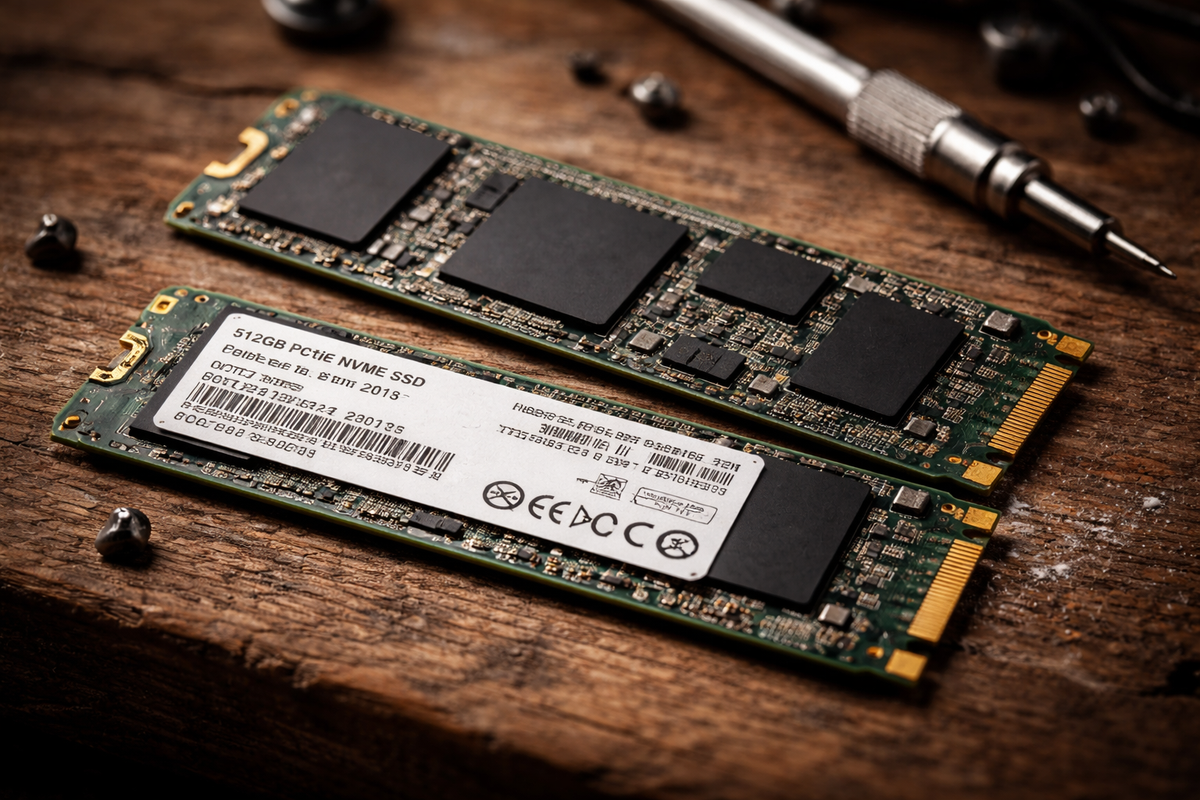
Why used SSDs are tricky
- Flash memory has finite writes (TBW — Terabytes Written).
- You usually can’t check how much wear a used drive has endured.
- Hidden exhaustion can make it fail sooner than expected — often long before the hardware’s resale value.
The comforting lie: “This used SSD is a steal — it still works fine.” Tempting, but dangerous if your data or uptime matters.
A simple rule of thumb
- Critical or irreplaceable data: buy new.
- Replaceable/test data with good backups: used may be okay — preferably enterprise-grade pulls. These often have higher endurance, but many are 5+ years old, and may have been running 24/7.
IMPORTANT: Don’t let sticker shock push you into a risky “deal.” Protect what matters most. And remember — a true friend might just save you from your next tech gamble.
Friendship + business doesn't mean no boundaries exist.
I learned this the hard way over a set of ancient SSDs, that sage advice isn't always accepted with open arms. I was offered a server for $800. It wasn't in the greatest condition. It had mud on the top cover. It had a retaining pin ripped out of the steel, so the cover doesn't stay.
As a friend, I agreed to the offer — contingent on it actually booting, or that I could repair it to a state where it would boot. It didn’t. He blamed my RAM. I brought my own RAM, still nothing. I suggested trying another identical node, but three days later, when we agreed to reconvene at his store, neither he nor node was there - just his shopkeep.
In the end, I returned the server, because he had wasted my time. No purchase, no sale, obtaining a different server from elsewhere.
He had been negotiating with someone else to buy the whole lot. I don't begrudge him for that. Make the sale happen!
Recovery mode?
We knew the node was not functional/salable, due to a memory power rail fault from the onboard LED diagnostic lights inside the chasis, and its poor condition.
I offered to purchase the Dell BOSS-S1 card with attached M.2 SSDs, the IDSDM card, the TPM Module, and Network Daughter Card (SFP+) from the R740XD.
We agreed on prices on everything except the IDSDM and Network Daughter Card.
I get to the store, and he decides that our prior agreement was a miscommunication because he then wants what would be the same price as a new SSD, for a 2018-vintage SSD which had data center operating time on it - and no idea as to the health of the SSDs.
No sale again. More time wasted.
When I privately called him on this nonsense, he didn't like that.
After the next few replies, I tried to help him look and see what I was talking about, with a diagnostic utility - Crystal Disk Info.
Unfortunately, sometimes in a difficult conversation, defeating ones opponent becomes the goal, above all else. I concede defeat. The only people who win an argument like that, are those who don't play the game.
Conclusion
I cannot justify buying worthless, or likely low remaining lifespan used hardware, when the price is unreasonably high or equal to new hardware.
It has nothing to do with the idea of "friends" or perception of favors. It is a simple, healthy boundary.
The lesson? Just because you can sell something doesn’t mean you should. Selling hardware that doesn’t work, or pushing someone to gamble on it, can damage more than just a transaction — it can damage your reputation, and friendships.