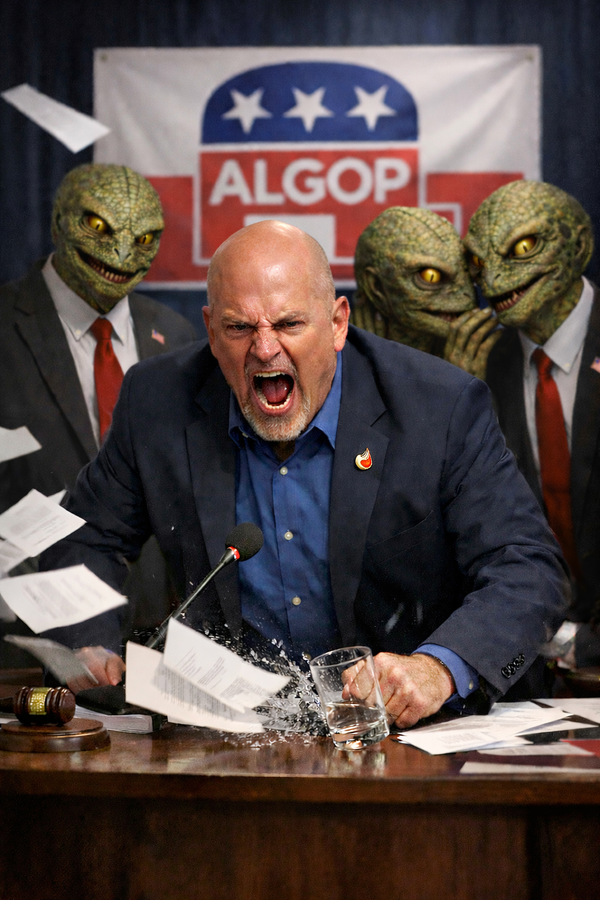
Constitution: Is one human life worth more than another, Alabama?
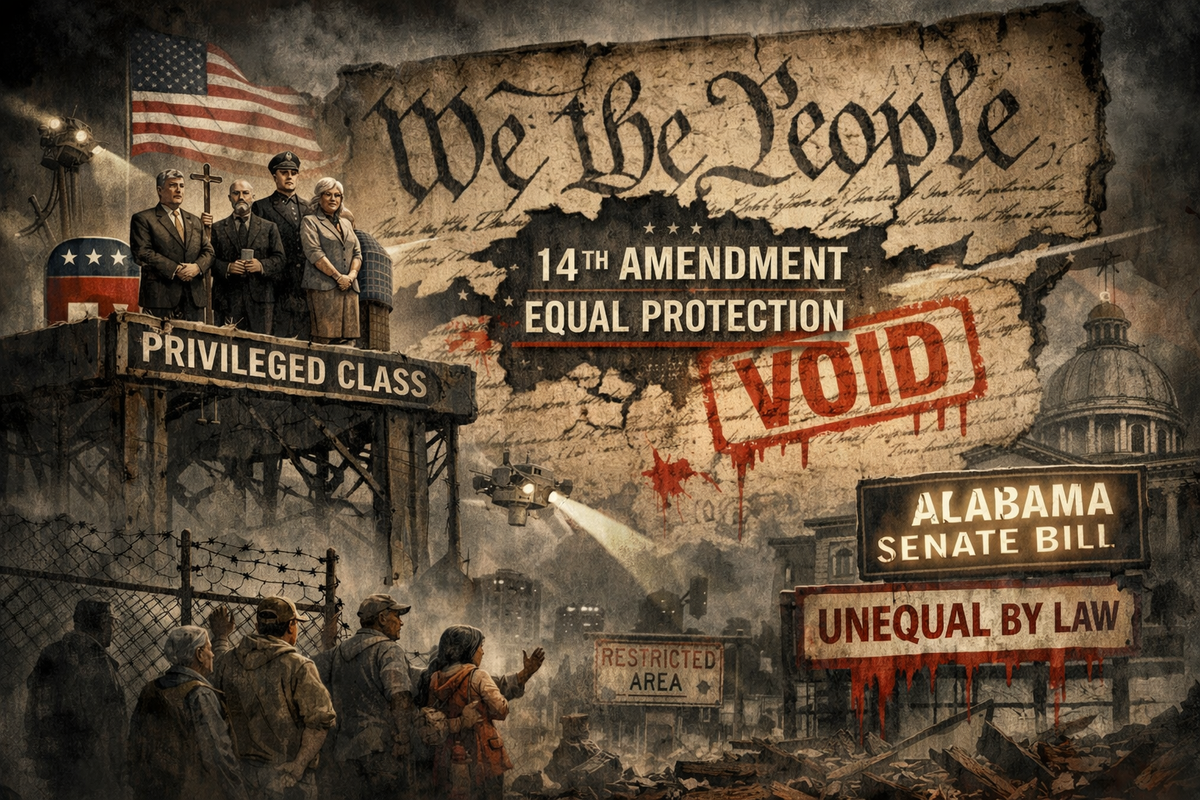
OPINION: Alabama does not need to create new classes of more valuable humans under law. It violates the US Constitution, and may create other situations where citizens are harmed in the process.
In the past, a radio talk show "Russ and Dee" with Russ and Dee Fine, had said when the Alabama legislature is in session, no Alabamian is safe - referring to the "creativity" of legislation in the past, and the corruption in our government, amidst an ongoing criticism of Alabama Governor Bob Riley at the time. They were eventually removed from the airwaves at Crawford Broadcasting's talk radio station in Birmingham (101.1FM).
2026 Alabama Senate Bill 20 is a Republican bill which would make assault of current or formal public officials a higher crime - a felony, but leaves assault on a regular ordinary citizen where it stands.
Nobody contests, that assault is bad, and that you shouldn't assault people. Nobody contests that we need law and order. The problem here, is this could establish a de jure situation where one person could be valued more than another, running astray of our system's need for equal protection. Currently, it's de facto that these individuals receive greater protection than an ordinary citizen already. Most public officials already have a level of immunity from prosecution should they commit a crime or civil rights violation, in Alabama.
Alabama Senator Larry Stutts (R) out of Tuscumbia has voiced opposition to this bill. He is absolutely correct. Others have voiced concerns, such as Senator Greg Albritton (R) out of Atmore, warned that adding new protected classes could elevate some victims above others under the law.
The US Constitution is supposed to protect against this.
At our nation's foundations, the US Declaration of Independence started with a primary philosophy, which informs the 1789 Constitution's interpretation.
All men are created equal
The US Constitution assumes equal moral worth of human beings, even if historically, the application had failed to live up to this idea. The Constitution eventually corrects who counts as equal over more recent amendments, not whether the equality exists.
Directly, the 14th Amendment has the "Equal Protection Clause", which requires that all "persons" be treated equally under the law. Once the state recognizes someone as a "person" (which for now might include corporations), it cannot:
- Declare one class of people more valuable than another (current or former politicians in this case).
- Provide greater legal protection to one group's life while diminishing another's.
(Note: This amendment is special. This regards PERSONS, not only US citizens. This is relevant in January 2026, with unrest in MN evoking conservatives to claim that they do not have any constitutional rights.) - Punish harms differently based on who the victim is, rather than what was done. (Oh, look, that's exactly what this is.
The 5th Amendment (due process, which protects life liberty and property) does so without hierarchy, and may also be violated if/when this Alabama bill is passed.
Alabama's Establishment: Hide inconvenient truth, stop real competitors before elections.
In case you didn't know about Alabama, this is the state with a system of secrecy and corruption which has run deep for many years. This isn't a new pattern. Uttering the fact these cases exist often results in conservatives yelling "libtard." However, these are real.
Corruption Cases
State systems failed to self-police, these ended up being federal.
Pretty sure we're missing several cases.
- 2023 - Federal kickback scheme, involving AL State Representative Fred Plump Jr. (D)
- 2023 - AL State Representative John Rogers (D) facing charges for obstruction in a scheme to defraud a Jefferson County Community Service Fund.
Law Enforcement Secrecy and Institutional Corruption
The thin blue line in Alabama really is a dividing line between officer and citizen, where officers enjoy protections not afforded to citizens... at least for a while...
❓ WHO can you trust in Alabama? Clearly there's a problem statewide.
Learn your rights. Use them.
- 2026 - Lawsuit filed against Jefferson County Sheriff Mark Pettway.
- 2025 - Sumiton/Kimberly Police Department officer Pogue misused ACJIC and was charged with 30 felony tampering charges.
- 2025 - Mobile Police Department - An officer abused a child, and had to be arrested by another agency.
- 2025 - Blount County Sheriff Office Employee, a child predator.
- 2024-2025 - Cordova, AL Police Chief Jason Hare resigned after a video of sexual misconduct toward a young, barely out of high school girl, who is an employee. The incident was concealed for a while.
- 2024 - Hanceville Police Department.
People died, narcotic drugs were redistributed from evidence. 60 felony investigations were dismissed because of compromised evidence. It was hidden until a death of a dispatcher forced exposure. - 2024 - Birmingham Police Officer Bisharat - Domestic violence
- 2021 - Birmingham Police Officer Wilcox - rape and a few other crimes involving narcotics.
- 2024 - Jefferson County Sheriff Deputy DUI Crash in a police cruiser, was placed on "administrative leave" at the time. (Under Sheriff Mark Pettway)
- 2025 - ALEA State Trooper Richey arrested. Heinous
- 2024 - ALEA State Trooper Claybrook arrested after retiring. Heinous.
- 2024 - ALEA State Trooper Rhodes arrested. Heinous.
- 2021 - ALEA State Trooper and Former FBI Agent raped an 11 year old.
- 2024 - Cherokee County, AL Police officer plants drugs on innocent people. Or was it Centre PD? Kilgore is a former Centre officer, but a lot of these incidents involve "gypsy" behavior. Resign to avoid prosecution and pop up elsewhere.
- 2024 - Decatur, AL - Police officer charged with murder.
- 2023 - Atmore News retaliated against.
The 1st Amendment is the most disrespected among law enforcement. - 2023 - Walker County - Tony Mitchell died of hypothermia and sepsis in custody. Afterwards, Sheriff Nick Smith was called into question when it was discovered there was non-APOSTC certified officers carrying weapons serving as school resource officers.
There have been 25 Walker County Sheriff employees either indicted or charged.
This is an ongoing situation, and people have reported threats coming from this department and associates for speaking ill of them. There are many social media posts from the Sheriff calling it a "witch hunt." - 2023 - Jefferson County Sheriff Officer Jefferson using position for personal gain.
- 2022 - Daleville Police Officer sergeant beat a detainee.
DOJ press release here. - 2018 - Brookside Policing for profit, went on for many years. Why did the county sheriff not investigate or act? Why did it go on for this long without state intervention?
Public Records: Difficult to get, if not laudatory.
Alabama has the nation's weakest public records law, which Alabama Senator Juandalyn Givan (D) seems to be most proud of after an officer involved shooting with the Homewood Police Department had body cam withheld indefinitely in the Jabari Peoples case. In Alabama, this public information law creates secrecy, rather than transparency, with no serious limit of fees or time taken.
Most do not publish use of force reports, misconduct/internal affairs dispositions, or any sort of transparency related things - unlike many other states.
Municipalities do what they want. As an example, towns like Mulga, AL created an ordinance which charges higher fees, to prevent citizens from requesting public information, in direct response to a request. The ordinance wasn't posted in 3 places as per Alabama State Law, but we'll just gloss over that. Sylvan Springs, AL used the same legal council, so they seem to have followed suit when the first uncontested mayoral election in 20 years happened in August 2025, making those rules retroactive for already submitted request, which halted a Sylvan Springs Online History/Archival project in its tracks. The Jefferson County Sheriff's Department under Sheriff Mark Pettway did the same - non-refundable $50 research fee, hampering obtaining raw data to compare with publicly released data from the Re-elect Mark Pettway campaign. Realistically, no ordinary citizen wanting to have proper oversight of their government is willing to pay $50 plus $10 per page, just to get public information that our local governments do not want out.
Other states force the burden to the government to prove the actual cost involved in performing the work, itemized, and even has a strict 7 day time limit for first response. Some states force fee-free release of information if it was already released in a prior request. Even FOIA has stricter guidelines for Federal agencies, yet one of my personal FOIA requests was fee-free (although it took a while).